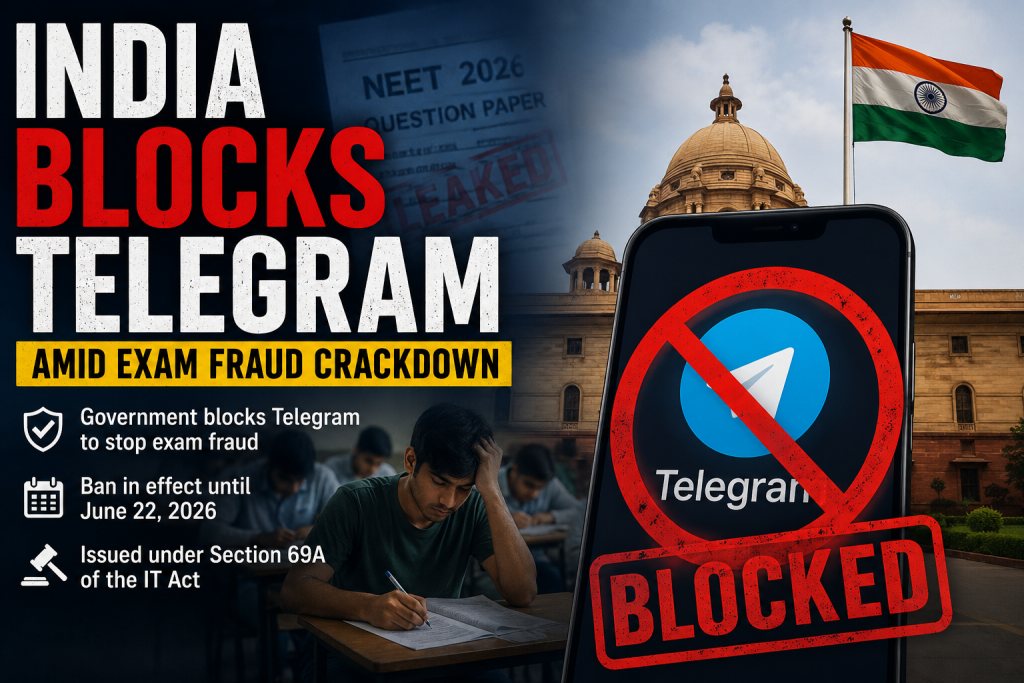
Government Takes Decisive Action to Protect the Integrity of Public Examinations
The Indian government has temporarily blocked access to the messaging platform Telegram in an effort to combat widespread examination fraud linked to the country’s highly competitive national entrance exams. The move comes after authorities alleged that the platform was being used to distribute leaked exam materials and coordinate cheating activities among candidates.
The decision has sparked nationwide debate, with supporters viewing it as a necessary step to preserve the credibility of India’s education system, while critics argue that restricting access to an entire communication platform could negatively impact millions of legitimate users.
Telegram Allegedly Used to Spread Leaked Exam Content
According to government officials, investigators discovered that numerous Telegram groups and channels were involved in circulating confidential examination papers, answer keys, and other unauthorized materials related to the National Eligibility cum Entrance Test (NEET), India’s premier medical entrance examination.
The encrypted nature of Telegram and its ability to host large public channels reportedly enabled rapid dissemination of sensitive information, making it difficult for authorities to contain the spread before the examination took place.
Officials believe that these activities threatened the fairness of the examination process and undermined the opportunities of millions of students who prepared honestly for the test.
A Temporary Rather Than Permanent Ban
Authorities have clarified that the restriction on Telegram is intended to be temporary and is designed specifically to prevent further misuse during the examination period. The suspension is expected to remain in place until the government determines that the risk of exam-related information leaks has significantly diminished.
The government emphasized that the action should not be interpreted as a permanent prohibition against Telegram but rather as an emergency measure aimed at protecting public interests and maintaining order during a critical national examination.
Protecting the Integrity of India’s Education System
India’s national entrance examinations are among the most competitive in the world, with millions of students competing for a limited number of seats in prestigious universities and medical institutions each year.
Any compromise in the integrity of these examinations can have far-reaching consequences, affecting public trust in the education system and disadvantaging students who compete fairly.
By taking swift action against platforms allegedly facilitating exam fraud, the government hopes to reinforce confidence in the country’s selection process and demonstrate its commitment to ensuring equal opportunities for all candidates.
Mixed Reactions from the Public and Digital Rights Advocates
The government’s decision has generated mixed responses across the country.
Many educators, parents, and students have welcomed the move, arguing that extraordinary measures are justified when the credibility of national examinations is at stake. They believe that preventing the circulation of leaked materials is essential to ensuring a level playing field.
However, digital rights organizations and technology experts have expressed concern over the blanket restriction. Critics argue that millions of users rely on Telegram for legitimate communication, education, business operations, and community engagement. They contend that authorities should focus on identifying and prosecuting the individuals responsible for illegal activities rather than restricting access to the platform as a whole.
The incident has reignited discussions about the balance between public security, digital freedom, and government intervention in online communication platforms.
Technology Presents Both Opportunities and Challenges
The rapid growth of digital communication platforms has transformed how information is shared worldwide. While these technologies offer significant benefits for education, collaboration, and innovation, they also create new challenges for governments seeking to prevent cybercrime, misinformation, and organized misconduct.
The case in India highlights the increasing complexity of regulating digital platforms that can be used for both legitimate and unlawful purposes. Policymakers around the world continue to face the difficult task of protecting public interests while preserving citizens’ access to open communication.
Looking Ahead
As authorities continue their investigation into the alleged examination fraud network, the temporary restriction on Telegram is expected to remain under review. The outcome may influence future government policies regarding digital platforms and their responsibility in preventing the spread of illegal content.
For Telegram, the situation underscores the growing pressure on technology companies to cooperate with governments in addressing criminal misuse while maintaining user privacy and freedom of expression.
Conclusion
India’s temporary blocking of Telegram represents one of the country’s most significant digital enforcement actions in response to examination fraud. Although the measure has divided public opinion, its primary objective is to safeguard the integrity of one of the nation’s most important educational processes.
The incident also serves as a reminder of the evolving challenges posed by modern communication technologies, highlighting the need for effective collaboration between governments, technology companies, and society to ensure that digital platforms remain tools for progress rather than instruments of misconduct.
